
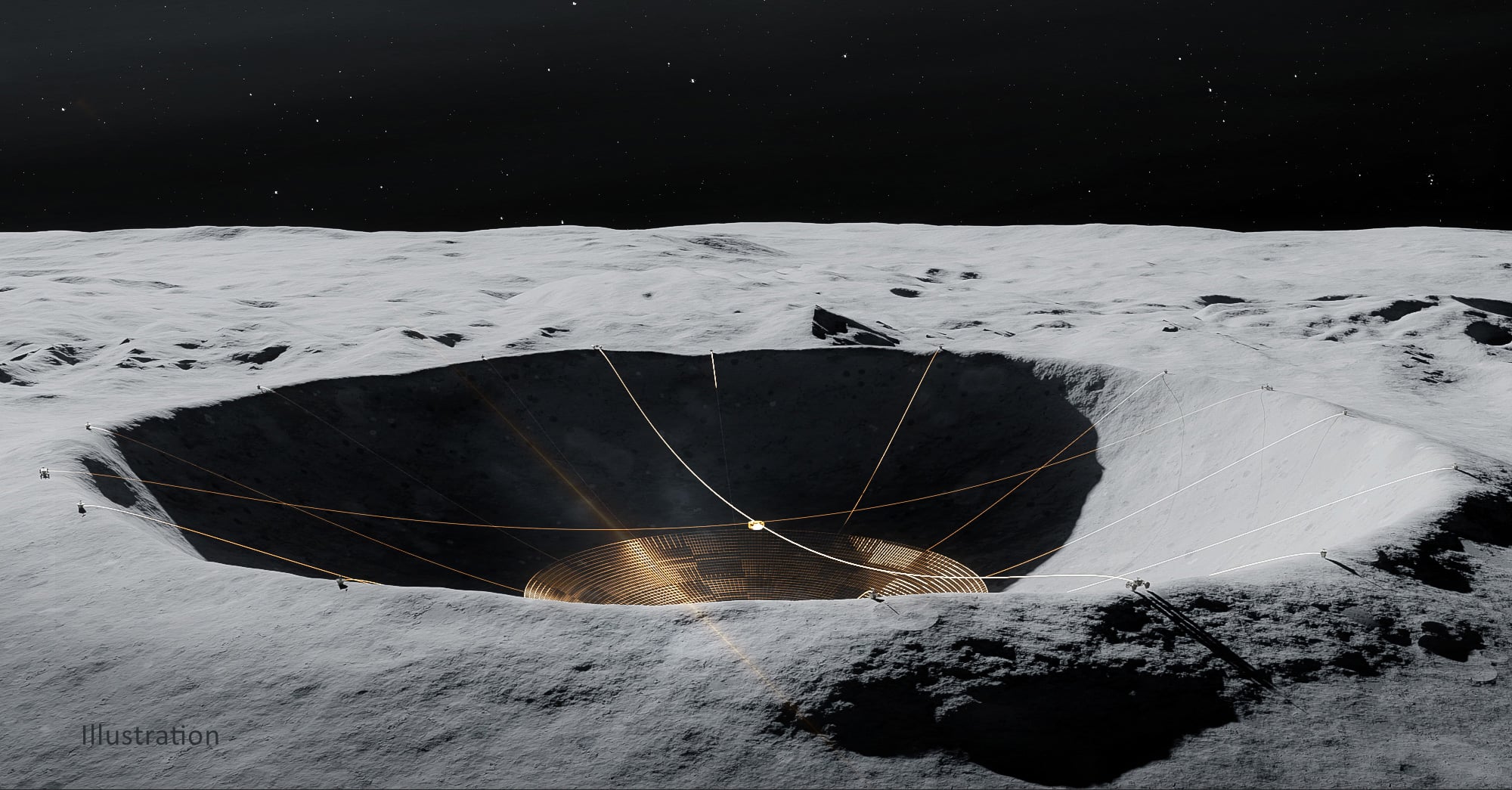
The crater, officially named McGetchin after the late volcanologist and former Lunar and Planetary Institute director Thomas McGetchin, spans roughly twice the length of an American football field. Situated on the boundary between the rugged lunar highlands and a flat mare, the feature reaches an average depth of 43 meters. A bright, expansive blanket of rock and dust surrounds the site, marking the debris thrown outward during the collision.
NASA Identifies Fresh 222-Meter Crater on the Lunar Surface
A massive impact crater, stretching 222 meters across, has emerged on the Moon, marking the largest discovery of its kind since NASA’s Lunar Reconnaissance Orbiter began its mission. Researchers estimate the formation occurred between April and May 2024, providing a rare look at pristine ejecta before space weathering alters the site.
Published in Science Advances, the study led by Dr. Mark Robinson of Intuitive Machines and Dr. Julie Stopar of the Lunar and Planetary Institute highlights the significance of this discovery. Such events of this magnitude are estimated to occur only once every 130 years. Because the site remains relatively untouched by subsequent meteorite bombardment, scientists intend to use it as a primary reference for studying the immediate effects of impact cratering. The findings offer a tangible connection to the models of ejecta distribution originally pioneered by McGetchin in 1973.



Comments (0)
No comments yet. Be the first!